Developing the New CRAFTVET Training Curriculum: Bridging Traditional Crafts with Future Skills
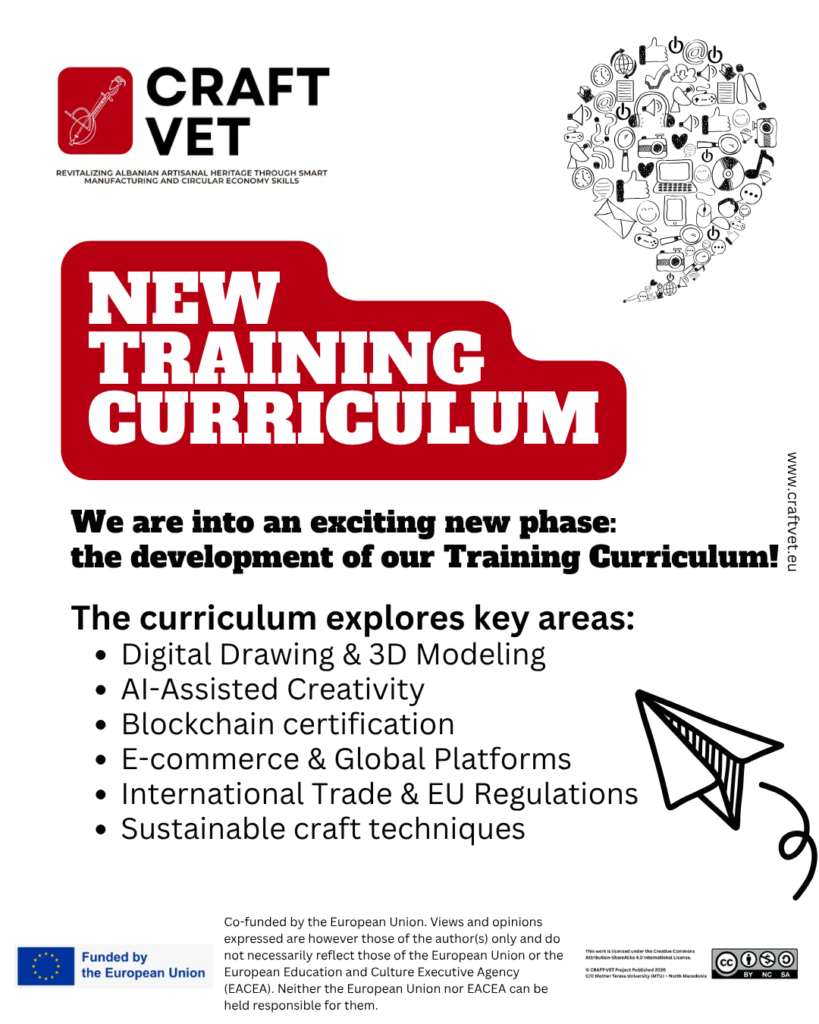
The CRAFTVET project is moving into an important phase with the ongoing development of its new training curriculum. This curriculum is designed to create a practical bridge between traditional craftsmanship and the digital, entrepreneurial and sustainability skills required in today’s economy. Albania has a rich tradition of craftsmanship, built on knowledge and techniques passed from generation to generation. However, preserving this heritage also means ensuring that artisans and future craftspeople are equipped to respond to changing technologies, customer expectations and market opportunities. Through CRAFTVET, traditional skills are not seen as something belonging only to the past, but as a strong foundation for innovation and future economic opportunities. Combining Craftsmanship with Digital Innovation A central component of the new curriculum is the integration of digital technologies into traditional craft practices. Learners will explore areas such as digital drawing and 3D modelling, helping them understand how modern design tools can support product development, prototyping and customisation. The curriculum will also introduce AI-assisted creativity, providing participants with opportunities to explore how artificial intelligence can support the creative process, generate ideas and complement traditional design methods. Another innovative area is blockchain-based certification. This will help learners understand how emerging technologies can potentially support product authenticity, traceability and the documentation of handmade products and their origins. Supporting Entrepreneurship and Market Access Creating high-quality craft products is only one part of building a sustainable business. Artisans also need the knowledge and confidence to present, promote and sell their products effectively. For this reason, the CRAFTVET curriculum will address e-commerce, digital marketing and access to global platforms, helping participants better understand how digital channels can connect local craftsmanship with customers beyond traditional markets. Attention will also be given to international trade and relevant EU regulations, strengthening participants’ understanding of the wider business environment and the opportunities and requirements associated with reaching European and international markets. Sustainability and the Circular Economy Sustainability is another key pillar of the curriculum. Participants will explore sustainable craft techniques, responsible use of materials, waste reduction, reuse and circular economy principles. These competencies can help artisans reduce their environmental footprint while also responding to growing consumer interest in sustainable, locally produced and responsibly made products. Building Skills for the Future The development of the CRAFTVET training curriculum represents an important step towards ensuring that Albania’s rich craft traditions are not only preserved, but also equipped to evolve, compete and thrive in a digital and sustainable future. By bringing together craftsmanship, technology, entrepreneurship and sustainability, CRAFTVET aims to create new learning opportunities for artisans and learners while contributing to the long-term resilience and visibility of Albania’s craft sector. A new generation of craft skills is taking shape — where tradition meets technology, creativity meets entrepreneurship, and cultural heritage becomes a driver for future opportunities. Follow the development of CRAFTVET and our upcoming activities at www.craftvet.eu. #CRAFTVET #TrainingCurriculum #DigitalSkills #CraftSkills #Innovation #CircularEconomy #VET #ErasmusPlus #CulturalHeritage #SustainableCrafts DisclaimerCo-funded by the European Union. Views and opinions expressed are however those of the author(s) only and do not necessarily reflect those of the European Union or the European Education and Culture Executive Agency (EACEA). Neither the European Union nor EACEA can be held responsible for them.